
Claude 4.6 Opus Fast: Anthropic's New Frontier in Reasoning and Speed
On February 5, 2026, Anthropic set a new benchmark for frontier AI models with the release of Claude 4.6 Opus. Building on the success of the 4.5 series, this latest flagship model introduces radical improvements in context handling, reasoning depth, and for the first time, a specialized "Fast" mode that delivers Opus-level intelligence at unprecedented speeds.
The 1 Million Token Breakthrough
The most significant headline from the 4.6 release is the expansion of the context window. While the standard version maintains a robust 200K token capacity, the new 1M token beta allows developers and enterprises to process entire codebases, massive legal archives, or months of financial data in a single prompt.
Crucially, Anthropic has addressed "context rot"—the performance degradation seen in earlier models as their context windows filled up. In "needle-in-a-haystack" retrieval tests at the 1M token scale, Claude 4.6 Opus maintained a 76% accuracy rate, a staggering leap from the 18.5% seen in previous generations.
Adaptive Thinking: Effort Levels
Opus 4.6 introduces Adaptive Thinking, a feature that allows the model to adjust its reasoning depth based on the complexity of the task. Users can now specify effort levels:
- Instant: For straightforward queries and rapid iteration.
- Balanced: The default mode for standard knowledge work.
- Deep: For complex architectural planning, security audits, and multi-file debugging.
This approach ensures that users aren't "over-paying" in terms of latency or compute for simpler tasks, while still having the full weight of Opus available when it matters most.
Opus 4.6 Fast Mode
Following the initial launch, Anthropic quickly rolled out Opus 4.6 Fast on February 7. This variant is specifically optimized for high-throughput enterprise workflows where latency is the primary bottleneck. By leveraging a new distillation technique and optimized hardware clusters, Fast mode provides the same reasoning capabilities as the standard Opus 4.6 but at a significantly reduced response time.
Benchmarks and Performance
Claude 4.6 Opus isn't just about larger context; it's about smarter execution. The model has set new records across several industry-standard benchmarks:
- Agentic Coding (SWE-bench Verified): 80.8%
- Terminal-Bench 2.0: 65.4%
- GDPval-AA Elo: +190 points over Claude 4.5
These scores indicate that Opus 4.6 is now the most capable model for autonomous software engineering and complex tool orchestration.
Developer Features: Compaction API and More
The release also includes several quality-of-life updates for developers:
- Compaction API (Beta): Enables "infinite conversations" by intelligently summarizing and condensing history without losing critical context.
- 128K Output Tokens: Allowing for the generation of massive reports or entire application modules in one go.
- Removal of Response Prefilling: A move toward more standardized API interactions, though it requires some minor adjustments for existing integrations.
Pricing and Availability
Despite the massive leap in capability, Anthropic has maintained pricing parity with the 4.5 model for standard context usage:
- Input: $5.00 per million tokens
- Output: $25.00 per million tokens
The 1M token window is available through a premium tier on the Claude Platform, Amazon Bedrock, and Google Cloud Vertex AI.
The Bottom Line
Claude 4.6 Opus Fast represents a shift from "chatbots" to "cognitive infrastructure." With its massive context window and adaptive reasoning, it is built for the era of autonomous agents and high-stakes enterprise AI.
This analysis is based on official Anthropic technical documentation and industry-standard benchmarking data.
Read more
Qwen 3.7 Max: Alibaba's Agent-Grade Reasoning Model
Alibaba's Qwen 3.7 Max is a text-only reasoning flagship with 1M token context, scoring #5 on the Artificial Analysis Intelligence Index and #3 in coding benchmarks.
Meta Muse Spark: A New Frontier in Multimodal Reasoning
Meta's Superintelligence Labs unveils Muse Spark, a natively multimodal reasoning model with multi-agent orchestration and strong performance in health and visual reasoning.
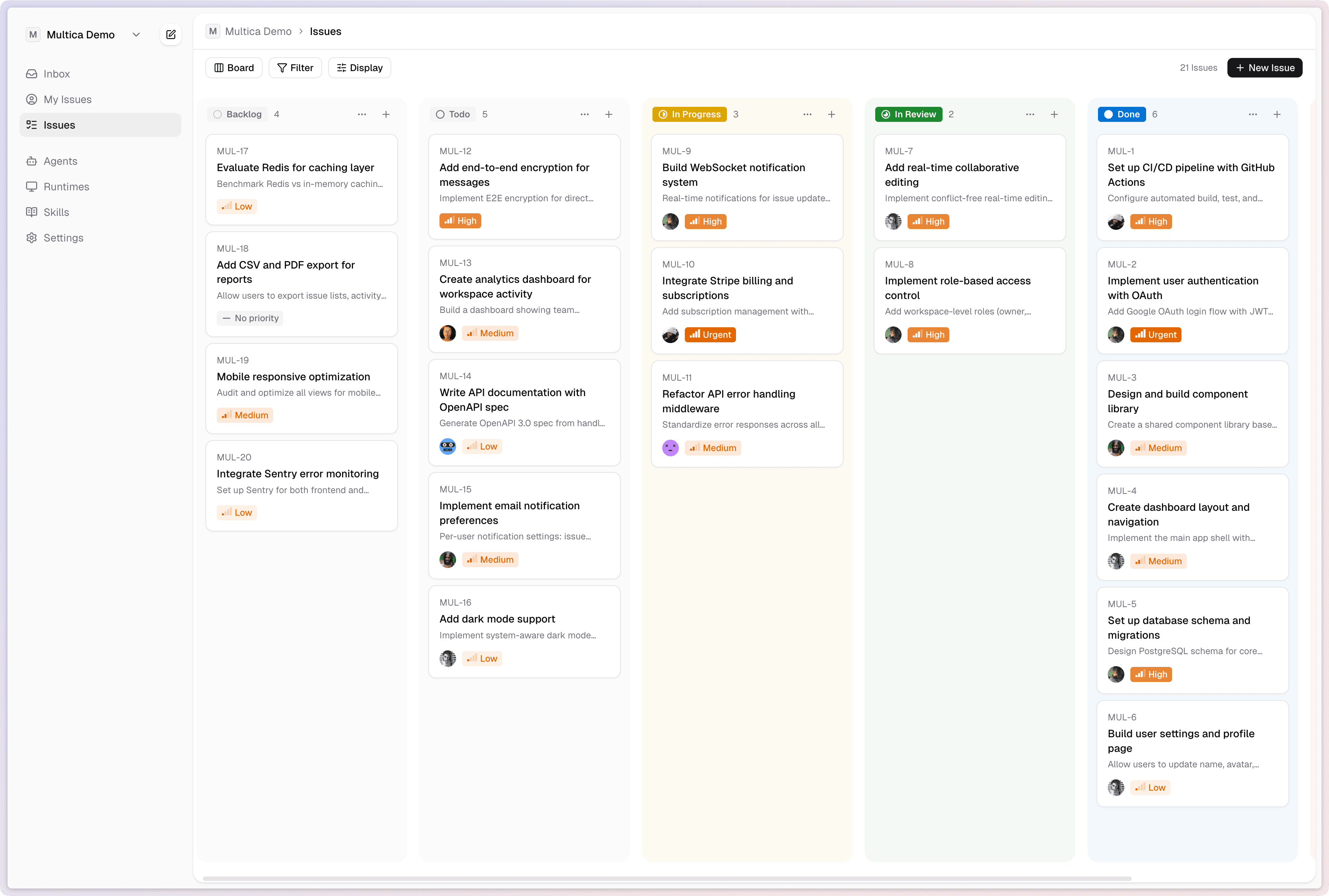
Multica: Turn AI Agents Into Real Teammates
Multica is an open-source platform that manages AI coding agents as full team members - assigning tasks, tracking progress, and compounding reusable skills across your organization.