Google Releases Gemma 4: The Most Capable Open Models and the TurboQuant Breakthrough
On April 2, 2026, Google DeepMind announced Gemma 4, its most intelligent and capable family of open-weight models to date. Released under the permissive Apache 2.0 license, Gemma 4 represents a major shift in Google's open-source strategy, removing previous restrictions on commercial use and user caps.
Intelligence per Parameter
The core philosophy behind Gemma 4 is "intelligence-per-parameter." Built from the same research as the Gemini 3 family, these models are designed to outperform models many times their size. The family includes four distinct sizes:
- Effective 2B (E2B): Optimized for mobile and edge devices, featuring native vision and audio.
- Effective 4B (E4B): The smallest multimodal variant that handles text, image, and audio with low latency.
- 26B-A4B (MoE): A Mixture-of-Experts model that activates only 3.8B parameters per token, achieving 97% of the quality of much larger dense models.
- 31B Dense: The flagship open model, currently ranking #3 on the global Arena AI leaderboard for open models.
The TurboQuant Compression Breakthrough
Alongside the models, Google unveiled TurboQuant, a revolutionary memory compression algorithm presented at ICLR 2026. TurboQuant addresses one of the biggest bottlenecks in AI: the KV (Key-Value) cache memory overhead.
Using a two-step pipeline—PolarQuant vector rotation and Quantized Johnson-Lindenstrauss (QJL) compression—TurboQuant allows models with massive context windows to run far more efficiently on consumer-grade hardware. This breakthrough enables the 256K context window in Gemma 4 to function without the massive VRAM requirements typically associated with long-context processing.
Native Multimodality and Agentic Workflows
Unlike many open models that use adapters for vision or audio, Gemma 4 is natively multimodal. It processes visual and textual data in the same latent space, leading to superior performance in:
- Spatial Reasoning: Understanding complex diagrams and UI layouts.
- Audio Intelligence: Transcribing and analyzing speech with emotional nuance.
- Agentic Workflows: Executing multi-step plans through improved tool-calling and reasoning.
Architecture Highlights: PLE and Dual RoPE
Gemma 4 introduces several architectural innovations:
- Per-Layer Embeddings (PLE): The "Effective" series (E2B, E4B) uses PLE to feed secondary embedding signals into every decoder layer, providing the representational depth of larger models in a smaller footprint.
- Dual RoPE: Alternating between standard and proportional rotary position embeddings to maintain high quality even at the edges of the 256K context window.
- Shared KV Cache: Reusing key/value tensors across layers to further reduce memory usage.
Why Apache 2.0 Matters
The move to the Apache 2.0 license is a significant win for the developer community. It provides:
- No MAU caps: Scale your application without worrying about user limits.
- Commercial Freedom: Full rights to use, modify, and distribute the models.
- No Royalty Obligations: Build profitable products without licensing fees.
Performance and Availability
Gemma 4 is available immediately on Google Cloud Vertex AI, Hugging Face, and through integrations with Keras and vLLM. In Arena.ai benchmarks, the 31B model outcompetes several proprietary models 20x its size, proving that efficiency is the new frontier in AI development.
This report is based on Google's official technical blog, ICLR 2026 research papers, and community benchmarking results.
Read more
Qwen 3.7 Max: Alibaba's Agent-Grade Reasoning Model
Alibaba's Qwen 3.7 Max is a text-only reasoning flagship with 1M token context, scoring #5 on the Artificial Analysis Intelligence Index and #3 in coding benchmarks.
Meta Muse Spark: A New Frontier in Multimodal Reasoning
Meta's Superintelligence Labs unveils Muse Spark, a natively multimodal reasoning model with multi-agent orchestration and strong performance in health and visual reasoning.
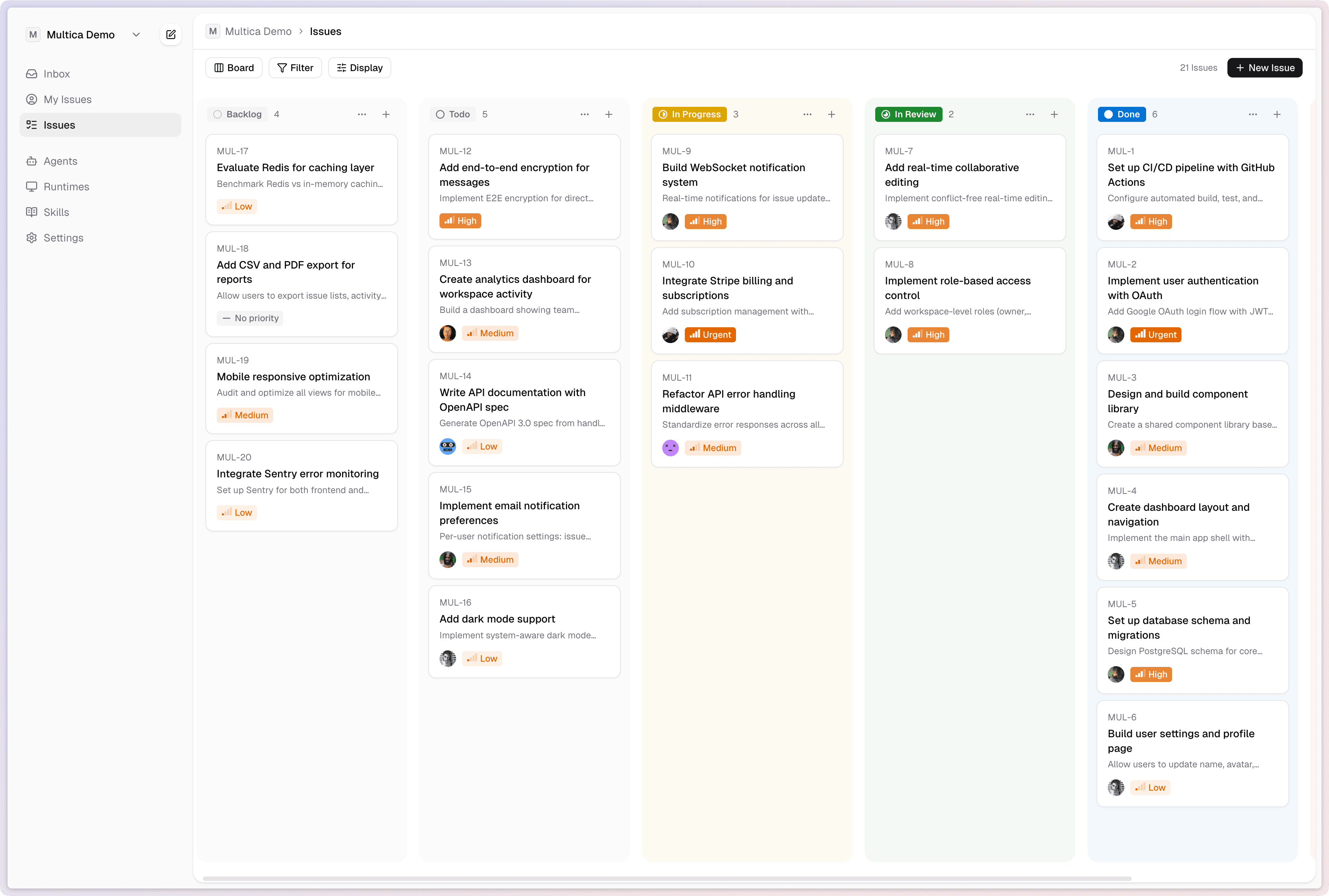
Multica: Turn AI Agents Into Real Teammates
Multica is an open-source platform that manages AI coding agents as full team members - assigning tasks, tracking progress, and compounding reusable skills across your organization.