Google Jules: The Autonomous AI Coding Agent That's Changing Development
Google has officially launched Jules, its autonomous AI coding agent, marking a significant milestone in the evolution of AI-assisted software development. After three months in public beta, Jules is now available to all developers, powered by Google's advanced Gemini 3.1 Pro model.
What is Jules?
Jules isn't just another code completion tool or co-pilot. Google describes it as "an early glimpse of what a true coding agent could become. Not a co-pilot, not a code-completion sidekick, but an autonomous agent that reads your code, understands your intent, and gets to work."
This represents a fundamental shift from AI assistants that suggest code to AI agents that actively perform development tasks autonomously.
Key Features
Autonomous Code Analysis
Jules reads and understands entire codebases, not just individual files. It can:
- Analyze code structure and dependencies
- Understand project context and coding patterns
- Identify bugs and potential improvements
- Generate comprehensive tests for existing code
Secure Cloud Environment
Unlike other AI coding tools that work locally, Jules operates in a secure Google Cloud virtual machine:
- Isolated execution for each task
- Secure code handling with enterprise-grade security
- Scalable infrastructure for large codebases
- GitHub integration with direct repository access
Multi-Agent Capabilities
Jules can coordinate multiple development tasks simultaneously:
- Feature development from requirements to implementation
- Bug fixing with root cause analysis
- Dependency management and version updates
- Code refactoring and optimization
Technical Architecture
Gemini 3.1 Pro Power
The latest version of Google's Gemini model provides:
- Advanced reasoning for complex coding challenges
- Coherent planning for multi-step tasks
- Visual verification with improved multimodal capabilities
- Agentic memories for context adaptation over time
- Multi-language support across popular programming languages
- Context understanding for large codebases
- Natural language processing for requirement interpretation
Cloud-Based Infrastructure
Jules leverages Google's cloud infrastructure for:
- Parallel processing of multiple tasks
- Resource scaling based on project complexity
- Secure isolation between different projects
- Real-time collaboration features
Development Workflow
Setup and Integration
Developers can connect Jules to their existing repositories with minimal setup:
- Connect GitHub or other version control systems
- Configure project settings and preferences
- Define task parameters and constraints
- Monitor progress through the dashboard
Task Execution
Once configured, Jules can handle various development tasks:
- Writing comprehensive test suites for existing code
- Building new features based on requirements
- Fixing bugs with detailed analysis and solutions
- Updating dependencies and managing version compatibility
- Generating documentation and code comments
Review and Approval
Jules maintains human oversight throughout the process:
- Progress tracking with clear milestones
- Change preview before implementation
- Audio changelogs for easy review
- Pull request creation for team collaboration
Competitive Landscape
Jules enters a crowded market of AI coding tools:
GitHub Copilot
- Approach: Code completion and suggestion
- Integration: Deep Visual Studio Code integration
- Model: OpenAI Codex
- Use case: Real-time coding assistance
OpenAI Codex
- Approach: Code generation from natural language
- Integration: Various IDEs and platforms
- Model: GPT-based architecture
- Use case: Quick code snippets and functions
Cursor
- Approach: AI-powered code editor
- Integration: Standalone development environment
- Model: Multiple AI models
- Use case: Complete development workflow
Jules Differentiation
- Autonomous execution rather than suggestions
- Multi-task coordination across projects
- Secure cloud isolation for enterprise use
- Comprehensive project understanding
Beta Performance
During its three-month beta period, Jules demonstrated impressive capabilities:
- Thousands of developers participated in testing
- Tens of thousands of tasks completed successfully
- Hundreds of bugs identified and fixed
- Significant improvements in user experience and performance
Model Evolution Timeline
- November 19, 2025: Gemini 3 Pro introduced with coherent planning and visual verification
- March 9, 2026: Upgraded to Gemini 3.1 Pro for Google Pro users with enhanced problem-solving capabilities
- April 1, 2026: Current version with Gemini 3.1 Pro as default model
Enterprise Considerations
For enterprise adoption, Jules offers several advantages:
- Security-first approach with isolated execution environments
- Scalable infrastructure supporting large development teams
- Integration flexibility with existing workflows
- Compliance features for regulated industries
The Future of AI Coding Agents
Jules represents Google's vision for the future of software development, where AI agents handle the routine aspects of coding while developers focus on architecture, creativity, and complex problem-solving.
The launch signals Google's commitment to competing in the AI coding space, leveraging its cloud infrastructure and AI expertise to create a comprehensive development solution.
Getting Started
Developers interested in trying Jules can:
- Visit jules.google to access the platform
- Connect repositories and configure settings
- Start with small tasks to evaluate capabilities
- Scale up usage based on project needs
This analysis is based on Google's official announcements and development community reporting.
Read more
Qwen 3.7 Max: Alibaba's Agent-Grade Reasoning Model
Alibaba's Qwen 3.7 Max is a text-only reasoning flagship with 1M token context, scoring #5 on the Artificial Analysis Intelligence Index and #3 in coding benchmarks.
Meta Muse Spark: A New Frontier in Multimodal Reasoning
Meta's Superintelligence Labs unveils Muse Spark, a natively multimodal reasoning model with multi-agent orchestration and strong performance in health and visual reasoning.
Multica: Turn AI Agents Into Real Teammates
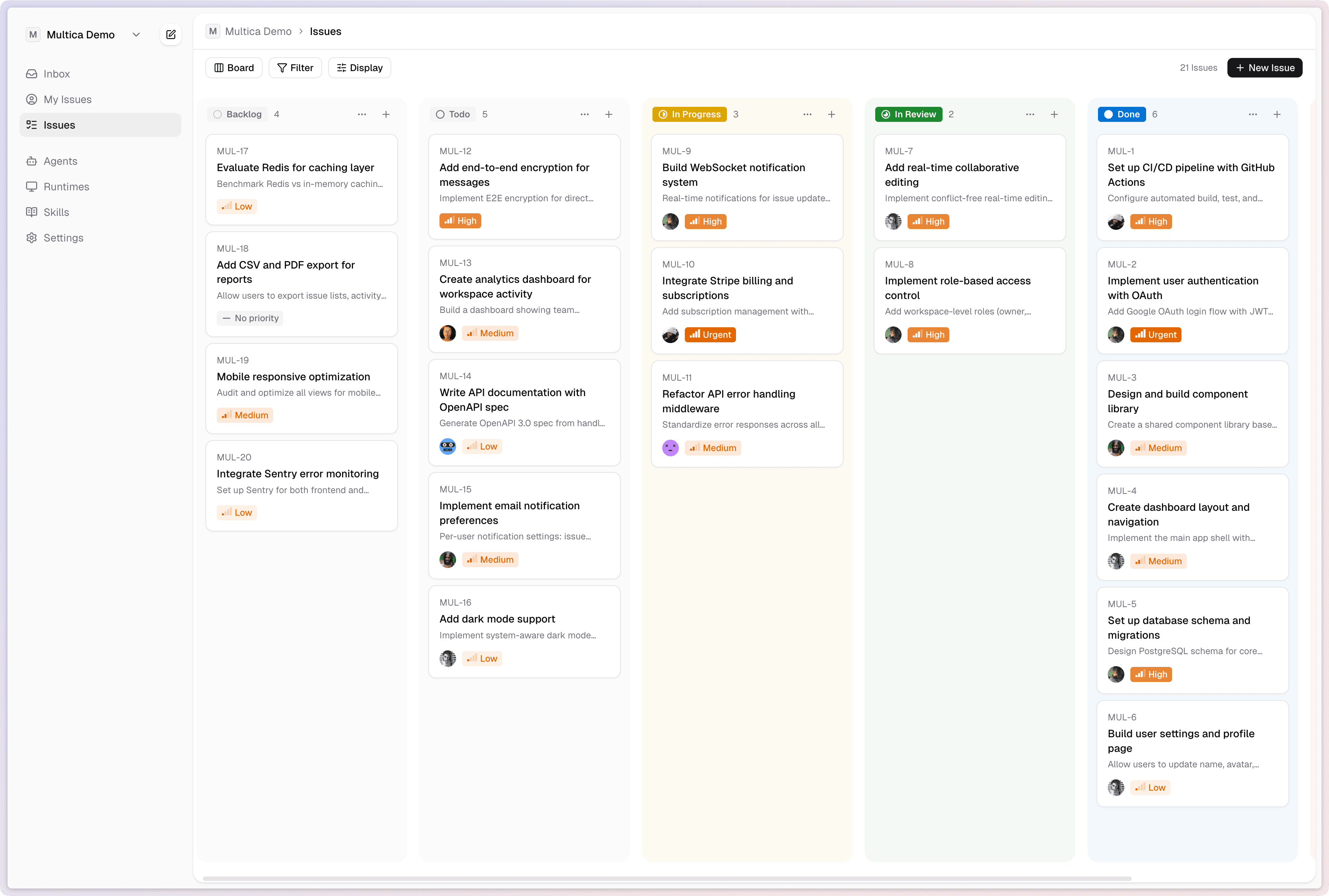
Multica is an open-source platform that manages AI coding agents as full team members - assigning tasks, tracking progress, and compounding reusable skills across your organization.