
Meta's $2B Manus Acquisition: The Era of AI Agents Begins
Meta Platforms has acquired Manus AI for $2 billion, a strategic move poised to significantly enhance immersive interaction for its AI Agents platform and future VR/AR hardware, deepening its commitment to tangible digital experiences within the metaverse.
The "Instagram Moment" for AI
The comparison to the 2012 Instagram acquisition isn't hyperbole. Just as Instagram secured Meta's dominance in the mobile-social era, Manus AI secures its position in the "Agentic Web."
While Meta's Llama models have provided the "brain" (the reasoning and language capability), they have largely remained reactive. To justify a $70 billion annual spend on AI infrastructure, Meta needs AI that doesn't just talk, but acts. Manus provides the "action engine" to make that happen, transforming Meta from a content platform into a labor-substitution powerhouse.
Challenging the "Operator"
The timing of the deal is critical. With OpenAI reportedly nearing the launch of "Operator"—a tool designed to control computers and execute tasks—Meta needed a mature, market-tested competitor.
Manus AI fits that bill perfectly. The startup hit an unprecedented $100 million in Annual Recurring Revenue (ARR) within just eight months of its launch. Manus AI operates as a high-velocity revenue engine with a proven product-market fit for professional and enterprise workflows. This commercial success highlights that the demand for autonomous agents is set to grow even further throughout 2026.
Democratizing the Agentic Web: From Enterprises to SMBs
This acquisition follows Meta's broader strategy of democratizing high-end AI tools. Earlier this year, Meta introduced a customer service AI agent pilot specifically for small to medium-sized businesses (SMBs) on Facebook and Instagram.
"Whether you're a one-woman shop in Brooklyn, family business in Denver, entrepreneur in Manila, or one of the other 200M businesses connecting with customers on Meta today, here's to your success!" — Clara Shih, VP of Business AI at Meta
While the initial pilot focused on parsing product catalogs and FAQs to answer queries, the Manus acquisition adds a layer of action that was previously the domain of large enterprises like AT&T and DoorDash. With the integration of Manus, these small businesses can soon deploy digital employees capable of autonomously managing returns or building personalized landing pages in real-time.
Impact on CX: The "Digital Employee" in a Box
The most immediate impact will be felt on WhatsApp Business, which has already evolved into a "loyalty bridge" for major brands. As L'Occitane recently demonstrated, WhatsApp now accounts for over 80% of their customer conversations in Asia-Pacific, moving users seamlessly from online discovery to in-store engagement.
By integrating Manus agents, Meta can take this a step further. Imagine a customer messaging a brand on WhatsApp to change a flight. In the old "Chatbot Paradigm," the bot would provide a link. In the new "Agentic Paradigm," the Manus-powered agent logs into the reservation system, checks availability, rebooks the seat, and processes the payment—all within the chat thread.
As Alan Chan, CEO of Omnichat, noted: "Loyalty delivered through WhatsApp stays close to the customer's daily behavior."
The Technical Edge: 80 Million Virtual Computers
The secret sauce behind the $2 billion price tag is Manus's proprietary "virtualization infrastructure." Unlike standard agents that run in fragile environments, Manus runs its agents on a massive fleet of cloud-based virtual machines.
This architecture allows the AI to:
- Sandbox Actions: Safely write and execute code (like Python) to process data
- Maintain State: Navigate through complex web sessions, log into sites, and extract data without losing progress
- Work Asynchronously: Complete tasks that take minutes or hours, allowing for a "set and forget" user experience
Clearing the Confusion: Brains, Not Gloves
It is vital for market analysts to distinguish between Manus AI (the software firm Meta just acquired) and Manus Machinae (the Dutch VR hardware company). While Meta's Reality Labs continues to develop haptic gloves for the Metaverse, this $2 billion check was written for the cognitive autonomy of Manus AI.
As we move into 2026, the race for "Personal Superintelligence" has officially begun. With the acquisition of Manus, Meta now owns the brain, the hands, and the distribution network to win it.
The Strategic Vision: Beyond Chatbots
This acquisition represents Meta's recognition that the future of AI isn't just about conversation—it's about action. While ChatGPT and other LLMs excel at answering questions and generating content, they've struggled with task execution.
Manus AI brings the missing piece: the ability to actually do things. Whether it's:
- E-commerce: Managing inventory, processing orders, handling customer service
- Travel: Booking flights, hotels, and managing itineraries
- Business Operations: Automating workflows, managing calendars, processing data
- Creative Work: Building presentations, editing content, designing graphics
The vision is AI that serves as a true digital employee, not just a digital assistant.
Industry Implications
This $2 billion acquisition sends shockwaves through the AI industry:
- OpenAI: Faces renewed competition in the personal agents space
- Microsoft: Must accelerate its Copilot and agent capabilities
- Google: Needs to enhance Gemini's agent features
- Anthropic: Pressure to advance Claude beyond conversation
- Startups: Face either acquisition pressure or massive competition from Meta's integrated solution
The deal also validates the market shift from conversational AI to agentic AI—a transition that will define the next phase of the technology industry.
The Road Ahead
For Meta, the integration challenge begins immediately. Combining Manus's agent capabilities with Meta's existing platforms—Facebook, Instagram, WhatsApp, Messenger—represents a massive technical undertaking.
For users, the promise is compelling: AI that can handle tedious digital tasks, freeing humans for more creative and strategic work. For businesses, it means digital employees that can work 24/7 without breaks or benefits.
For the industry, this acquisition signals that the era of AI agents has truly arrived. The question is no longer "if" AI can execute tasks, but "how well" and "how safely" it can do so.
The $2 billion question now is whether Meta can deliver on this vision of truly useful, autonomous AI agents at scale. But with Manus's technology and Meta's distribution, they've assembled the pieces needed to win the race for personal superintelligence.
This analysis is based on official acquisition announcements, industry reports, and Meta's strategic statements about AI agent capabilities.
Read more
Qwen 3.7 Max: Alibaba's Agent-Grade Reasoning Model
Alibaba's Qwen 3.7 Max is a text-only reasoning flagship with 1M token context, scoring #5 on the Artificial Analysis Intelligence Index and #3 in coding benchmarks.
Meta Muse Spark: A New Frontier in Multimodal Reasoning
Meta's Superintelligence Labs unveils Muse Spark, a natively multimodal reasoning model with multi-agent orchestration and strong performance in health and visual reasoning.
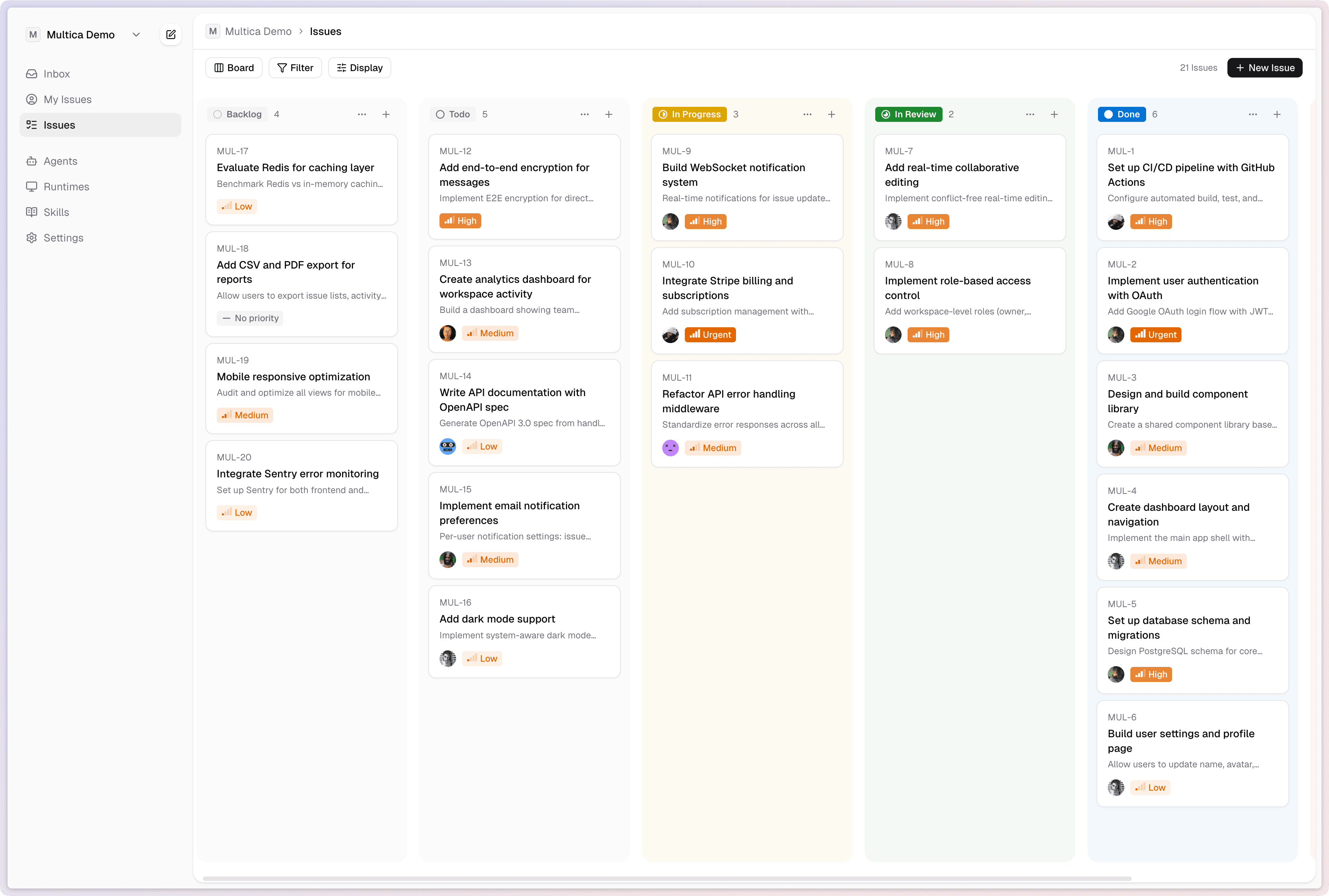
Multica: Turn AI Agents Into Real Teammates
Multica is an open-source platform that manages AI coding agents as full team members - assigning tasks, tracking progress, and compounding reusable skills across your organization.