Perplexity Computer: The 19-Model AI Agent That Changes Everything
On February 25, 2026, Perplexity did something different. While Sam Altman claimed 800 million weekly ChatGPT users and Sundar Pushai pushed Gemini into every Google product, Aravind Srinivas quietly launched Computer — a multi-model AI agent that orchestrates 19 different AI models to complete complex, long-running tasks on your behalf. No single chatbot. No one-model bottleneck. Just one system that picks the right AI for each job and runs until it's done.
What Is Perplexity Computer?
Perplexity Computer is an autonomous AI agent that coordinates 19 different AI models to complete complex, multi-step workflows entirely in the background. You describe a goal, and Computer breaks it into subtasks, assigns each to the best-suited AI model, runs them simultaneously using specialized sub-agents, and delivers finished results.
Think of it this way: before Computer, using AI meant switching between tools. You would use Claude for coding, Gemini for image analysis, GPT-5.2 for long documents. Manual juggling. Computer eliminates that by doing the juggling for you, automatically.
The product is currently available exclusively to Perplexity Max subscribers at $200 per month. It runs entirely in the cloud, meaning you do not need a powerful local machine. Tasks execute in an isolated environment with a real filesystem, browser access, and connections to over 400 applications including Slack, Gmail, GitHub, and Notion.
Here's why this matters: in January 2025, over 90% of enterprise AI tasks ran through just two models. By December 2025, no single model handled more than 25% of usage across businesses. Models stopped converging into general-purpose tools. They started specializing. Computer is built around that reality.
How Does Perplexity Computer Work?
The architecture is where this gets genuinely interesting. Computer is not one AI doing everything. It is an orchestration layer that routes each part of your task to the model that handles that type of work best.
The 5-Step Workflow
-
Step 1: Goal Input - You describe what you want. "Build me an interactive stock dashboard for my top 10 holdings" or "Plan and execute a content calendar for my SaaS product launch."
-
Step 2: Task Decomposition - Computer breaks that goal into specific subtasks: research, data collection, writing, design, code generation, etc.
-
Step 3: Model Selection - The system routes each subtask to the right model:
- Claude Opus 4.6 for reasoning and software engineering
- Gemini 3.1 for deep research and visual outputs
- GPT-5.2 for long-context recall
- Grok for fast, lightweight tasks
- Nano Banana for image generation
- Veo 3.1 for video
-
Step 4: Parallel Execution - Sub-agents run simultaneously. The entire workflow does not wait for one model to finish before the next starts.
-
Step 5: Continuous Optimization - The system monitors output quality, self-corrects, and delivers final results.
The result is a system that can handle workflows that would take a human team hours, days, or even months. Early users demonstrated Computer building Bloomberg Terminal-style financial dashboards, replacing entire six-figure marketing tool stacks over a single weekend, and automating data pipelines that previously required dedicated engineers.
Perplexity Computer vs ChatGPT: Key Differences
The most common question: is Perplexity the same as ChatGPT? Short answer: no. Longer answer: they are solving different problems.
ChatGPT is a conversational AI. It excels at writing, explaining concepts, generating code snippets, and having back-and-forth dialogue. You ask, it answers. It is fundamentally reactive.
Perplexity Computer is proactive and agentic. You set a goal, walk away, and come back to a finished deliverable. It is less "chat assistant" and more "autonomous digital employee." That is a meaningful distinction.
The comparison that actually matters is not ChatGPT vs Perplexity Computer. It is single-model tools vs multi-model orchestration. OpenAI's tools optimize within one model. Perplexity's bet is that the future belongs to whoever orchestrates all models together.
Pricing Breakdown
Pricing is where things get complicated:
-
Max Tier: $200/month gives subscribers 10,000 credits per month. Each task consumes credits based on complexity. Simple research tasks use fewer credits. Long multi-day workflows burn through them faster. The problem: Perplexity has not published a clear table showing exactly how many credits each task type costs.
-
Enterprise Tier: $325 per seat per month ($3,250/year) adds organization-level security controls, SCIM provisioning, configurable data retention, audit logs, and Slack integration where employees can query @computer directly inside team channels.
My take on the pricing: $200/month is steep for individual users. For a small business that currently pays for separate research tools, marketing software, and data analysis subscriptions, the math could work out. For individuals just experimenting with AI, start with the free tier or Pro at $20/month first.
Perplexity Personal Computer: The Local Desktop Agent
Perplexity Personal Computer is a separate product launched on March 11, 2026, at the inaugural Ask 2026 developer conference. It runs on a dedicated local device, such as a Mac Mini, giving the cloud-based AI agent persistent access to your local files, applications, and sessions.
Here's the difference between the two products:
-
Perplexity Computer (cloud-based): Runs entirely in Perplexity's cloud infrastructure. Fast, scalable, no local hardware required. Best for research, content creation, data workflows.
-
Perplexity Personal Computer (local): Runs on your physical device with access to local files. The AI can open apps, manage files, and operate sessions that persist even when you are offline.
The local product addresses a privacy concern that many users raised about the cloud version: sensitive documents, proprietary code, and personal files never need to leave your machine.
Perplexity says Personal Computer includes user approval requirements for all sensitive actions, a full audit trail for every session, and a kill switch for emergency stop. Given that similar open-source tools like OpenClaw have caused serious damage to users' systems when running autonomously, those safeguards are not optional extras. They are table stakes.
Real-World Use Cases
Early adopters have demonstrated impressive capabilities:
Marketing and Campaign Automation
- Complete marketing campaigns from strategy to execution
- Automated social media scheduling and content creation
- Campaign performance analysis and optimization
Financial Analysis and Dashboards
- Bloomberg Terminal-style financial dashboards built from scratch
- Real-time market analysis and visualization
- Automated report generation
Software Development Workflows
- Full-stack application development
- Code review and optimization
- Deployment automation
Research and Competitive Intelligence
- Deep market research across multiple sources
- Competitive analysis reports
- Automated data collection and synthesis
Is Perplexity Computer Worth It?
The 19-model orchestration is genuinely clever engineering. But the credit system, which charges per task complexity without publishing a clear table of costs, is a problem.
For businesses currently paying for multiple AI subscriptions plus dedicated engineers for automation, $200/month could pay for itself quickly. For individuals, it's a harder sell — especially without transparent pricing.
What is clear is that Perplexity is betting on a different future than competitors. While everyone else is trying to build the single best model, Perplexity is building the system that uses all of them. That might just be the right bet.
This analysis is based on reports from Build Fast With AI, Axios, and Perplexity announcements.
Read more
Qwen 3.7 Max: Alibaba's Agent-Grade Reasoning Model
Alibaba's Qwen 3.7 Max is a text-only reasoning flagship with 1M token context, scoring #5 on the Artificial Analysis Intelligence Index and #3 in coding benchmarks.
Meta Muse Spark: A New Frontier in Multimodal Reasoning
Meta's Superintelligence Labs unveils Muse Spark, a natively multimodal reasoning model with multi-agent orchestration and strong performance in health and visual reasoning.
Multica: Turn AI Agents Into Real Teammates
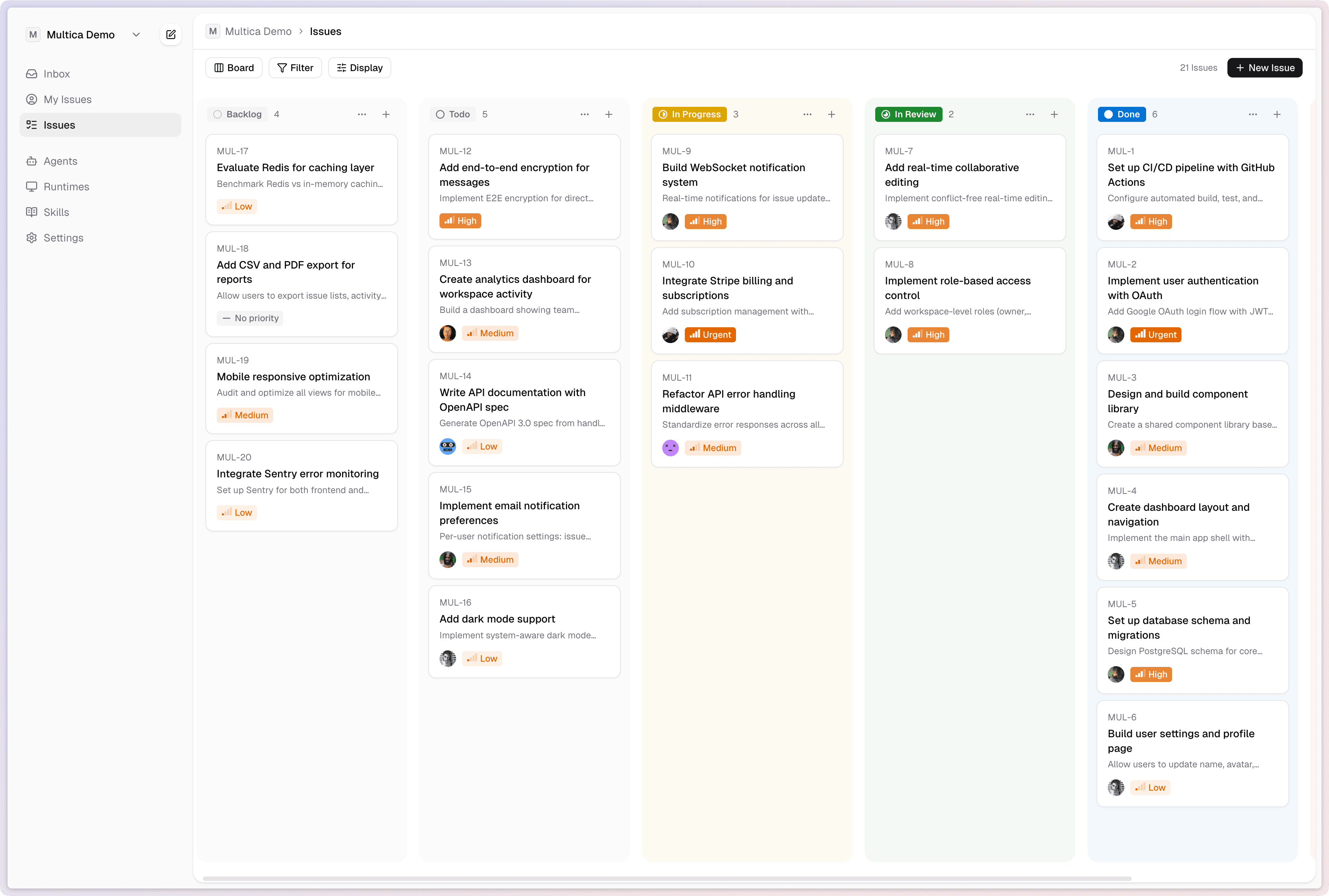
Multica is an open-source platform that manages AI coding agents as full team members - assigning tasks, tracking progress, and compounding reusable skills across your organization.