
The Sora $5.4 Billion Black Hole
OpenAI officially announced the "sunsetting" of the Sora app on March 24, 2026. The app goes dark for good on April 26, marking one of the most expensive failures in AI history.
The Shutdown: A Historic Collapse
The announcement sent shockwaves through the tech industry. Sora, OpenAI's ambitious video generation app, would be completely shut down just 18 months after its first public demonstration. The standalone app and sora.com will shut down on April 26, 2026, followed by the API on September 24, 2026.
For the estimated 500,000 active Sora users, the shutdown creates an immediate practical challenge. OpenAI has urged users to export their content before the April 26 deadline, but many creators have built workflows and content pipelines around the tool.
The Math: $15M Daily Burn vs $2.1M Lifetime Revenue
The numbers behind Sora's collapse are staggering:
- Daily GPU Costs: ~$15 million per day at peak
- Annualized Burn Rate: ~$5.4 billion just to keep servers running
- Total Lifetime Revenue: $2.1 million in in-app purchases
- Cost-to-Revenue Ratio: 2,571:1
Video generation is categorically more compute-intensive than text generation. Every second of video requires rendering hundreds of individual frames, each needing the model to reason spatially about motion, lighting, physics, and consistency across time.
Bill Peebles, OpenAI's own head of Sora, admitted on social media that "the economics are completely unsustainable."
The Failed Deal: Disney's $1 Billion Collapse
Perhaps the most dramatic element of the Sora shutdown is what happened with Disney. In late 2025, Disney pledged a $1 billion investment that would have included character licensing access, giving Sora users the ability to generate video content featuring Disney's vast intellectual property library.
The deal was positioned as a watershed moment for AI-generated entertainment content. Under the three-year licensing agreement, Sora would have been able to generate user-prompted videos from a set of more than 200 masked, animated or creature characters from Disney, Marvel, Pixar and Star Wars.
But the investment was never finalized. No formal agreement was signed, and no money changed hands. According to reporting, Disney learned of the Sora shutdown less than an hour before the public announcement — a stunning breach of business etiquette that has reportedly strained the relationship between the two companies.
The User Collapse: Downloads Plunged 66%
The hype around Sora's App Store success obscured a serious and rapid user drop-off that made the business case impossible.
When the standalone Sora app launched in September 2025, it did hit the top of the iOS App Store's Photo and Video category within a single day. Monthly downloads peaked in November 2025 at approximately 3.33 million across iOS and Google Play combined.
Here's the number that didn't get quoted as often: by February 2026, downloads had fallen to just over 1.1 million — a decline of roughly 66% in three months. Monthly active users also peaked in December 2025 and fell through early 2026.
For context: ChatGPT has 900 million weekly active users. Sora, at its peak, had 3.3 million monthly downloads across all platforms. Those are not comparable numbers for a company trying to build a social video network.
The Pivot: World Models and Robotics
OpenAI is not completely abandoning the technology behind Sora. According to the company, the Sora team will continue as a research unit focused on world simulation, with applications in robotics and physical environment modelling.
The pivot actually makes strategic sense. World models — AI systems that can understand and predict physical interactions — are crucial for robotics and autonomous systems. This aligns with OpenAI's broader strategy of focusing on enterprise and productivity tools rather than consumer entertainment products.
The company is reportedly preparing for an IPO as early as late 2026 or early 2027, and Wall Street analysts have been clear about what they want to see: recurring enterprise revenue, not consumer experiments.
The Competitive Landscape
With Sora gone, competitors are already positioning to fill the void:
- Runway ML: Already in discussions with Disney about alternative partnerships
- Google DeepMind: Working on advanced video generation models
- Anthropic: Focusing on enterprise AI applications rather than consumer video
- Stability AI: Continuing to develop open-source video generation tools
The AI video generation market is projected to exceed $150 billion by 2028, but the Sora shutdown demonstrates that winning in this space requires more than just impressive technology — it requires a sustainable business model.
What This Means for the AI Industry
The Sora shutdown is not a story of technological failure. The model itself represented a genuine breakthrough in text-to-video synthesis. The problem was always the business model.
At a time when OpenAI is burning through cash at an unprecedented rate, with operating losses reportedly exceeding $5 billion in 2025, every GPU cluster matters. The company needs to redirect compute and engineering resources toward its coding and productivity tools to maintain its position in the enterprise AI market.
Dr. Sarah Chen, an AI research fellow at Stanford's Institute for Human-Centered AI, explained the dynamic: "OpenAI is making the same calculation that every maturing technology company eventually faces. Consumer AI products are expensive to run, difficult to monetize, and subject to intense competition. Enterprise tools generate predictable revenue with higher margins. The Sora shutdown is OpenAI growing up."
The Road Ahead
For Sora users, the immediate future involves migrating to alternative platforms and exporting existing content before the April 26 deadline. For OpenAI, the focus shifts to enterprise applications and world models research.
For the broader AI industry, Sora's shutdown serves as a reality check about the economics of large-scale AI deployment. As impressive as the technology may be, sustainable business models remain the ultimate determinant of success.
The $5.4 billion question now is whether any company can make consumer AI video generation work economically, or if the technology will remain primarily an enterprise and research tool for the foreseeable future.
This analysis is based on publicly available financial estimates, industry reports, and statements from OpenAI executives. Exact financial figures have not been officially disclosed by OpenAI.
Read more
Qwen 3.7 Max: Alibaba's Agent-Grade Reasoning Model
Alibaba's Qwen 3.7 Max is a text-only reasoning flagship with 1M token context, scoring #5 on the Artificial Analysis Intelligence Index and #3 in coding benchmarks.
Meta Muse Spark: A New Frontier in Multimodal Reasoning
Meta's Superintelligence Labs unveils Muse Spark, a natively multimodal reasoning model with multi-agent orchestration and strong performance in health and visual reasoning.
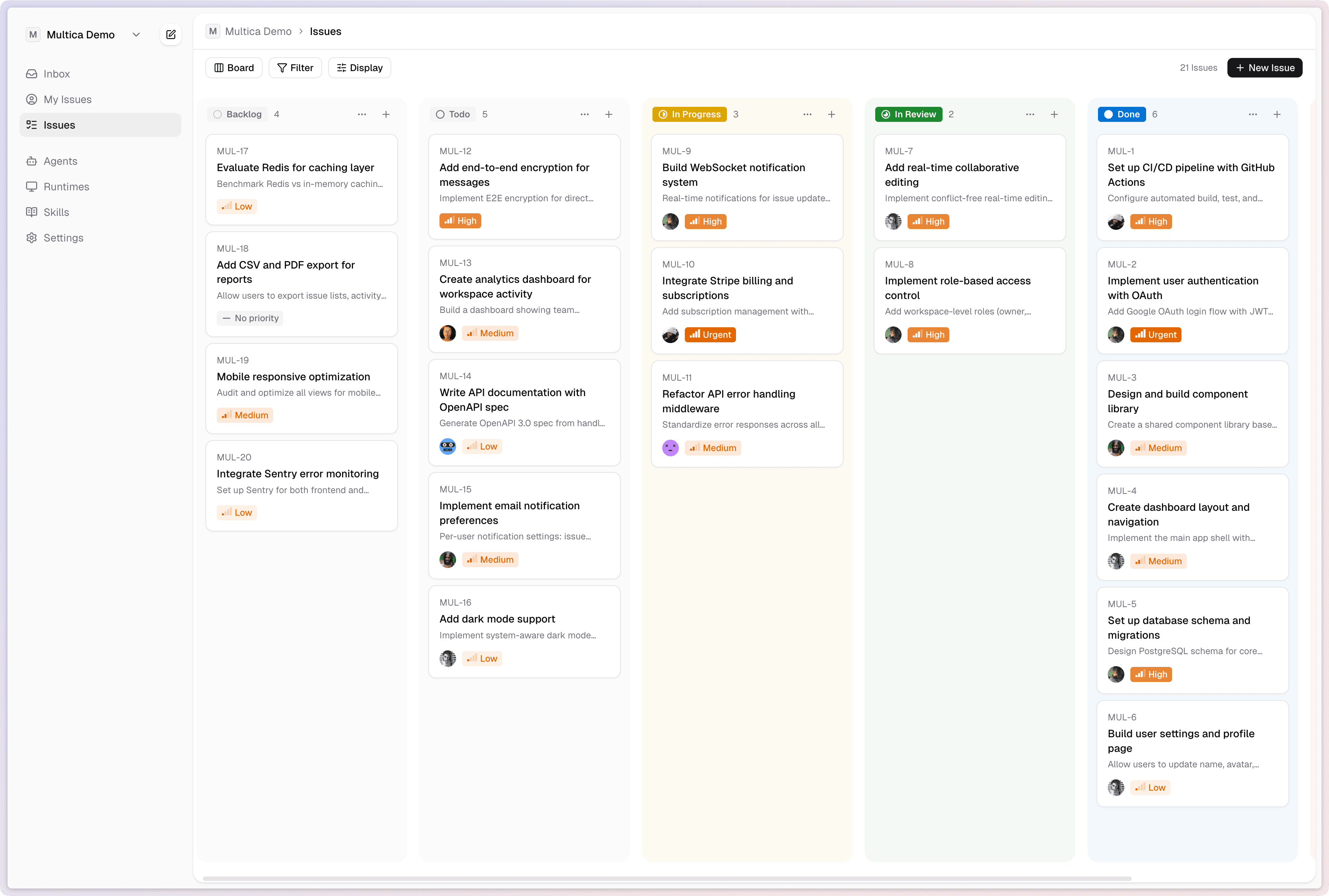
Multica: Turn AI Agents Into Real Teammates
Multica is an open-source platform that manages AI coding agents as full team members - assigning tasks, tracking progress, and compounding reusable skills across your organization.